Set a direction without pretending to know everything
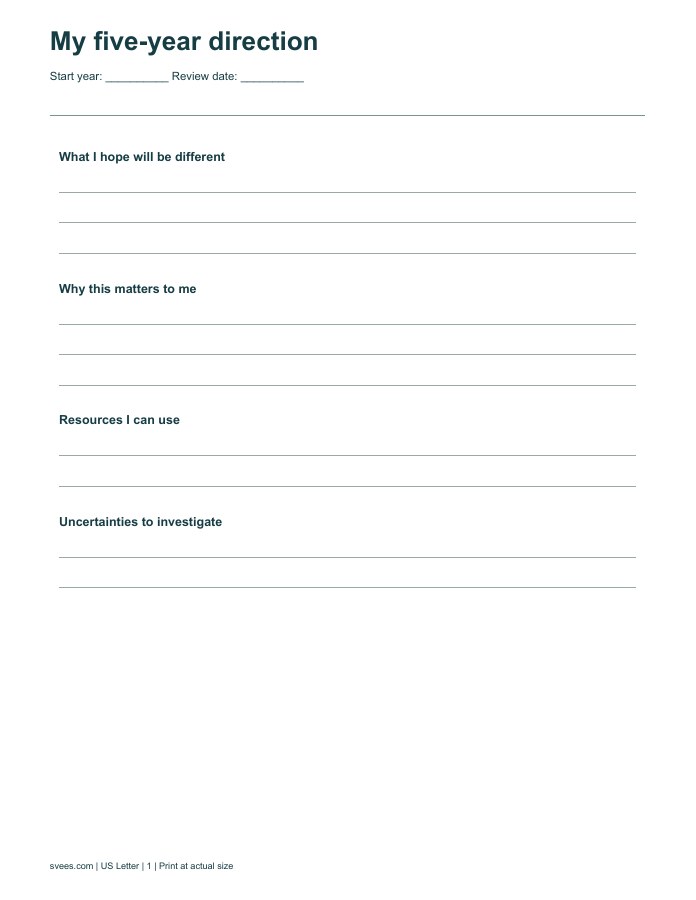
A 5 year plan template is useful when you want a longer view of work, learning or personal projects but do not yet have every step mapped out. Start with a description of what you hope will be different five years from now. The first page separates that direction from the reasons it matters, the resources you already have and the uncertainties you need to investigate.
Use annual milestones as checkpoints
The second page gives each year a row for a milestone, evidence of progress and a dependency. Write outcomes you can recognise, such as completing a qualification or finishing a portfolio, rather than filling every row with a vague promise to improve. Leave later milestones provisional. A longer plan becomes more useful when you can revise it as circumstances change instead of treating the first draft as a commitment.
Bring the first step into the next ninety days
The third page asks for one near-term outcome, three actions, a first-week step and a review date. Choose actions that fit the time and resources you currently control. If an action depends on someone else's decision, name the dependency. Keep this page somewhere you will actually revisit; a long-range plan cannot guide daily choices if the next step stays buried in a folder after you finish writing.
Review the assumptions as well as the tasks
The free PDF is a three-page handwriting workbook on US Letter paper. It contains no automatic forecasts or guaranteed outcomes. At each review, compare what happened with your earlier assumptions and adjust the later milestones accordingly. The related SMART goals pack provides goal worksheets, quarterly dashboards, milestone planning, weekly reviews and an XLSX tracker for a more regular cycle of recording progress between those larger annual checkpoints.